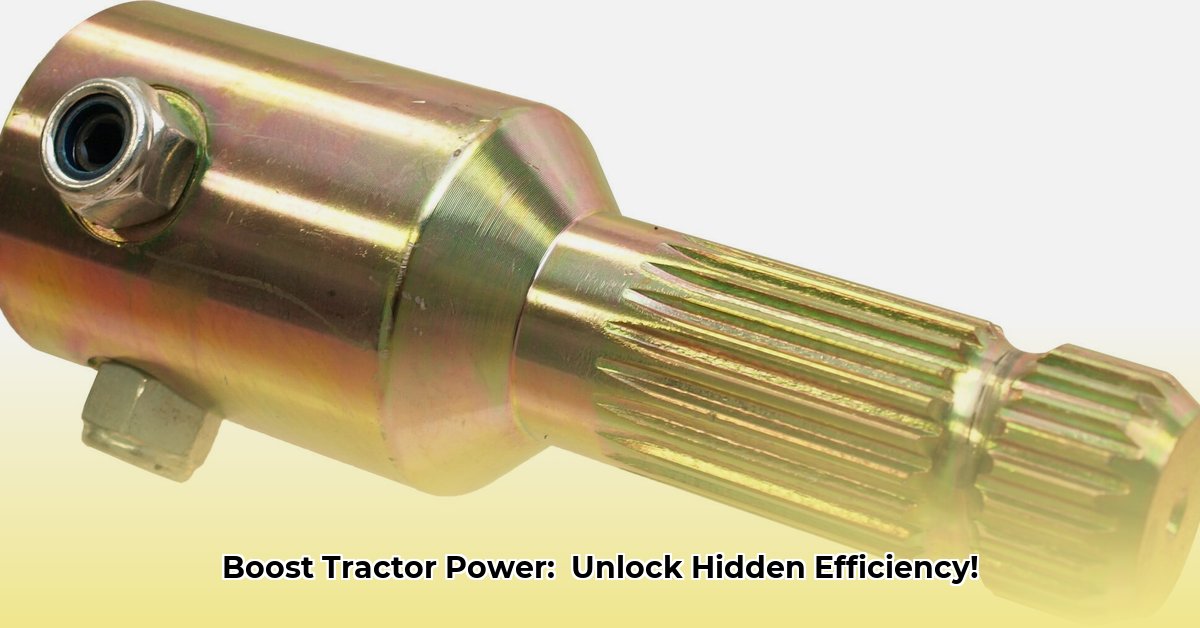
Understanding PTO Adapters and Their Role in Sustainable Agriculture
Power take-off (PTO) adapters are essential for connecting your tractor's power source to various implements, significantly impacting farm efficiency and environmental sustainability. Choosing the right adapter is crucial for maximizing power transfer, minimizing fuel consumption, and reducing your environmental footprint. But with a variety of options available, how do you ensure you're making the most sustainable choice? For more information on PTO winches, check out this useful resource.
Matching PTO Adapters to Your Tractor and Implements
Before selecting an adapter, carefully assess your farm's needs. This involves considering several key factors:
Tractor Horsepower: The adapter's capacity must match your tractor's power output. Overloading an adapter strains both the tractor and the adapter, leading to reduced efficiency and increased maintenance costs. "Matching horsepower to adapter capacity is crucial for optimal performance and longevity," says Dr. Emily Carter, Agricultural Engineering Professor at Cornell University.
Implement Requirements: Different implements have varying power demands. A small baler requires less power than a large tiller. Choosing an adapter with insufficient capacity will affect performance and fuel efficiency. "Underpowering implements leads to increased fuel consumption and reduced productivity," notes Dr. Michael Davis, Extension Specialist in Agricultural Machinery at Iowa State University.
Sustainability Goals: Are you aiming to minimize fuel consumption, reduce emissions, or improve overall efficiency? This helps narrow down your options to adapters with specific features that align with these objectives.
Types of PTO Adapters: Mechanical vs. Hydraulic
Two primary categories of PTO adapters exist, each presenting distinct advantages and disadvantages:
Mechanical PTO Adapters
These adapters offer a simpler, often more affordable solution. They are typically easier to maintain and repair. However, mechanical adapters may be less efficient than hydraulic options, especially for heavier tasks.
- Pros: Lower initial cost, simpler design, straightforward maintenance.
- Cons: Lower efficiency compared to hydraulic adapters, less precise power control.
Hydraulic PTO Adapters
Hydraulic adapters allow for more precise control over power transfer, often resulting in improved efficiency and fuel savings. They can provide smoother operation and better control over various implements. However, they are usually more expensive and require more complex maintenance procedures.
- Pros: Higher efficiency, finer power control, smoother operation.
- Cons: Higher initial cost, more complex maintenance, potentially steeper learning curve.
Optimizing PTO Adapter Use for Enhanced Efficiency and Sustainability
Beyond selecting the right adapter, maximizing its performance is essential for achieving both efficiency and sustainability.
Maintenance and Best Practices
Regular Inspections: Regularly inspect your adapter for wear and tear, loose connections and fluid leaks. Early detection prevents costly repairs.
Proper Lubrication: Consistent lubrication minimizes friction and extends adapter lifespan. Always follow the manufacturer's guidelines for lubricant type and frequency.
Gear Selection: Choosing the appropriate gear for the task optimizes power transmission and minimizes strain on both the adapter and the tractor. Don't overload your equipment.
Avoid Overloading: Overloading the adapter leads to premature wear, reduced efficiency, and potential damage to both the adapter and the tractor.
The Environmental Impact: Sustainable Practices with PTO Adapters
Sustainable agriculture demands careful consideration of environmental consequences. When selecting a PTO adapter, prioritize these factors:
- Material Selection: Opt for adapters made from recyclable materials to minimize waste.
- Energy Efficiency: Choose adapters designed for optimal power transfer, minimizing fuel consumption and emissions.
- End-of-Life Considerations: Consider options with established recycling programs to reduce environmental impact at the end of the adapter's lifespan. "Sustainability should not be an afterthought, but a core factor in all purchasing decisions," advises John Miller, Sustainability Manager at Midwest Agricultural Solutions.
Choosing a Fuel-Efficient PTO Adapter: A Step-by-Step Guide
- Assess Your Needs: List all implements you'll be using and their power requirements.
- Check Tractor Specifications: Verify PTO horsepower and shaft dimensions.
- Research Adapter Options: Compare models based on efficiency, durability, safety features, and compatibility. Consider online reviews and ratings.
- Prioritize Quality: High-quality adapters offer better longevity, reducing long-term costs and waste.
- Verify Compatibility: Ensure compatibility with both your tractor and implements before purchasing.
- Follow Installation Instructions: Correct installation is crucial for optimal performance and safety.
- Maintain Regularly: Adhere to the manufacturer's maintenance schedule for optimal performance and longevity.
Choosing the right PTO adapter is a pivotal step towards enhancing both the efficiency and sustainability of your farming operations. By considering the factors outlined above and following best practices, you can contribute to a more productive and environmentally responsible agricultural system.